
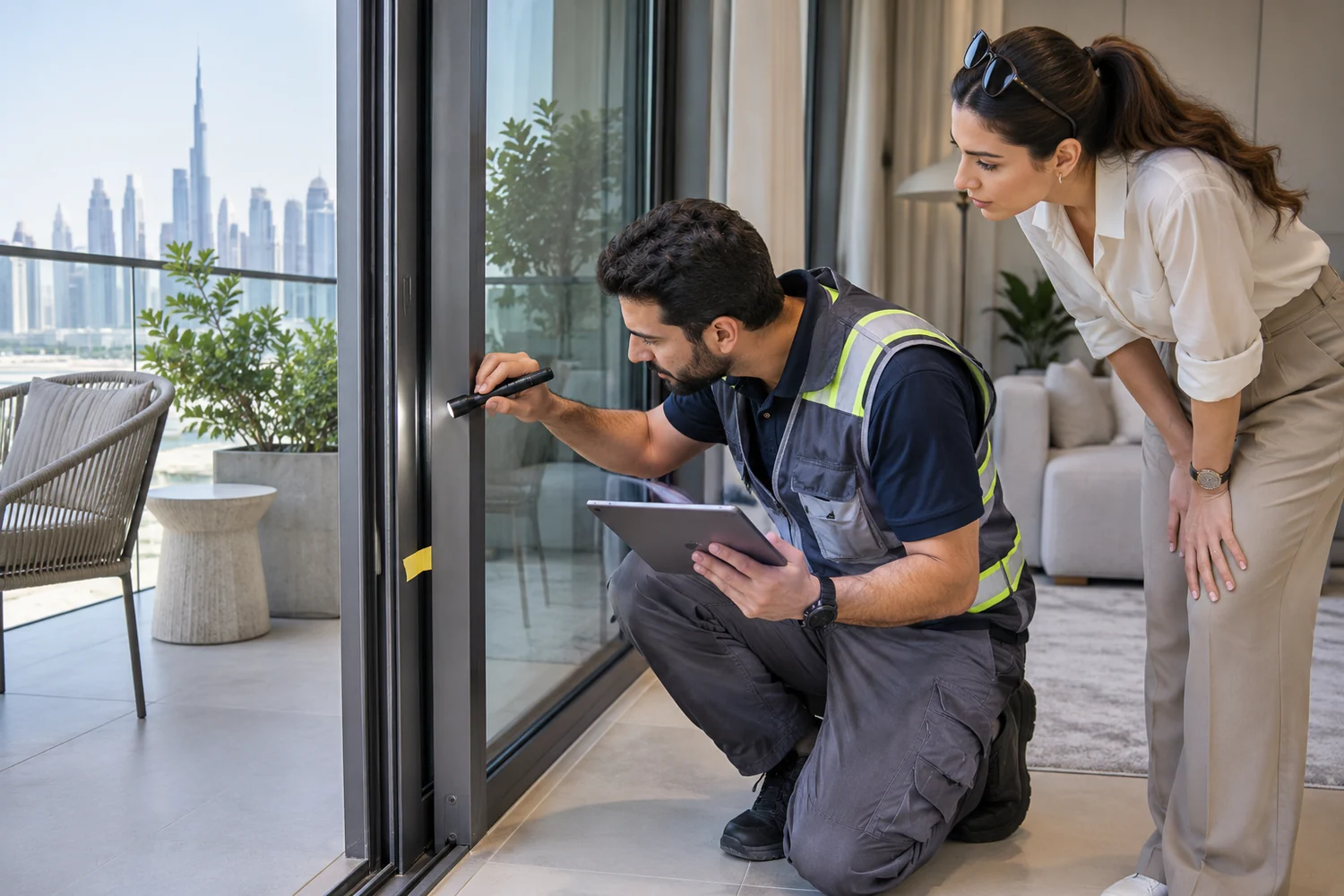
Snagging Inspection in Dubai: DIY vs Hiring a Professional
Should you snag your new Dubai home yourself or hire a professional? Compare costs, tools and legal timelines, plus a practical DIY snagging checklist.
Collecting the keys to a new home is a moment most buyers wait years for. Before you sign the handover acceptance, though, one step protects your investment more than any other: the snagging inspection.
A snag is any defect, unfinished item or deviation from the agreed specification. It can be as minor as a chipped tile or as costly as a slow leak behind a bathroom vanity. Snagging is the process of finding and recording these issues so the developer fixes them at its own cost.
The question most Dubai buyers face is simple: should you inspect the property yourself, or pay a professional? This guide compares both options, explains what the law covers, and helps you choose the right approach for your home.
Why Snagging Matters Before You Accept Handover
Under Article 40 of Dubai Law No. 6 of 2019 on Jointly Owned Real Property, developers remain liable for structural defects for ten years from the project’s completion certificate. The law also provides a one-year period for repairing or replacing defective installations, including mechanical, electrical, sanitary and sewerage installations, normally starting when the unit is handed over to its owner. If an owner refrains from taking possession, that one-year period starts from the project’s completion certificate instead.
Here is the practical point: record visible finishing issues and installation defects at handover, from doors that stick and uneven grout to faulty outlets or an AC unit that struggles. The applicable contract, warranties and legal provisions determine the remedy for each issue; the one-year installation provision should not be treated as a blanket rule for every cosmetic snag. Defects recorded promptly are easier to track than issues raised eleven months later, when memories and paperwork have faded.
For a wider view of handover day itself, our practical apartment handover checklist walks through the full process room by room.
DIY Snagging: What You Can Realistically Check
A self-inspection costs nothing but time, and it gives you a close look at every corner of your new home. With a careful eye and a few simple tools, you can catch most visible finishing issues.
Advantages of DIY snagging
- No inspection fee, which suits smaller units with straightforward finishes.
- Flexible timing, so you can return for a second walk-through at your own pace.
- Personal familiarity, because you learn how every system in the home works.
Limitations to keep in mind
- Hidden defects are easy to miss. Moisture behind walls, poor insulation and concealed leaks rarely show to the naked eye.
- No specialist equipment. Thermal cameras, moisture meters and laser levels are not part of most home toolkits.
- Less weight with the developer. A handwritten list is useful, but a structured report with photos and locations is harder to dispute.
A simple DIY snagging checklist
Bring a flashlight, masking tape, a phone charger to test sockets, and your phone for timestamped photos. Then work through each room in the same order:
- Walls and ceilings: cracks, uneven paint, stains and visible patching.
- Floors and tiles: chips, lippage, gaps in grout, and hollow sounds when tapped.
- Doors and windows: smooth opening, secure locks, intact seals and undamaged glass.
- Plumbing: run every faucet for several minutes, flush toilets and check under sinks for drips.
- Electrical: test every switch and socket, and confirm the distribution board is labeled.
- Air conditioning: run each unit, check airflow and look for drainage leaks.
- Kitchen and wardrobes: hinges, drawer runners, countertop joints and appliance function.
- Balcony: drainage slope, railing stability and the sliding door track.
Mark each snag with tape, photograph it, and note the room and exact location.
Hiring a Professional Snagging Company in Dubai
A professional snagging company sends a trained inspector, often with an engineering background, to assess the property against a detailed checklist. The real difference lies in what they can detect beyond the visible surface.
What a professional inspection includes
- Thermal imaging to reveal hidden leaks, missing insulation and overheating electrical points.
- Moisture meters to confirm whether walls and floors near wet areas are dry.
- Laser levels and testers to check that floors are flat, walls are plumb and sockets are wired correctly.
- A structured report with photos, room references and defect categories, ready to submit to the developer.
- A re-inspection option to verify that every item has been properly fixed.
How much does snagging cost in Dubai?
Pricing depends on the unit size and the scope of the inspection. Professional snagging in Dubai typically costs around AED 1,000 to AED 3,000 for an apartment, with villas costing more (Mortgease). Confirm the current written quote, VAT treatment and whether a re-inspection is included.
Set against the cost of fixing a concealed leak after the warranty period ends, the fee is modest. It is worth budgeting for alongside the other costs of running an apartment in Dubai.
When a professional is worth the fee
- You are buying a larger one-, two-, or three-bedroom apartment, a penthouse or a villa with complex systems.
- You live abroad or are buying to rent out, and cannot attend handover in person.
- You are a first-time buyer and unsure what "normal" finishing looks like.
- You are buying a premium or branded residence where finish quality is central to value.
DIY vs Professional Snagging: A Side-by-Side Comparison
| Factor | DIY snagging | Professional snagging |
|---|---|---|
| Cost | Free | Roughly AED 1,000–3,000 for an apartment, plus VAT |
| Time needed | Half a day or more | Two to four hours on site |
| Tools | Flashlight, tape, phone charger | Thermal camera, moisture meter, laser level, testers |
| Hidden defects | Often missed | Much more likely to be found |
| Report quality | Personal notes and photos | Structured, categorized report |
| Best suited to | Studios and small units, confident owners | Larger homes, overseas buyers, first-time buyers |
DIY snagging works well for visible finishing issues in a smaller home. A professional inspection is the safer choice when the property is larger, the stakes are higher, or you cannot be there yourself.
The Smart Middle Ground: Combine Both Approaches
Many experienced owners use both methods at different stages. That way, they balance cost with peace of mind.
- Plan ahead while the building is still under construction. Following your developer's construction updates helps you anticipate handover and book an inspector early. Our guide on how to read a construction update explains what each stage really means.
- Do your own walk-through first. Use the checklist above to note obvious issues and get familiar with the layout.
- Book a professional before you sign. Let the inspector focus on hidden and technical defects.
- Re-inspect before the one-year period ends. A check in month ten or eleven catches issues that only appear after a full Dubai summer of heavy AC use.
What to do once you have your snag list
Submit the list to the developer in writing and keep copies of every email and photo. Agree on a timeline for repairs, then confirm each fix before closing the item.
A reputable developer will treat a clear, itemized snag list as a normal part of handover rather than a dispute. At Prestige One, for instance, owners moving into completed buildings in communities such as Dubai Sports City go through a structured handover before settling in. If a developer does not respond within the liability period, the Dubai Land Department is the regulator to approach.
Once the snags are resolved, our guide to your first 90 days in a new Dubai home covers utilities, maintenance and settling in.
Frequently Asked Questions About Snagging in Dubai
When should I book a snagging inspection?
Book as soon as you receive the developer's handover or completion notice. Good inspectors are often booked up during busy handover periods, so early booking secures your preferred date.
Can I move in before snags are fixed?
In most cases, yes. Minor snags can be repaired after you move in, provided they are recorded in writing. Moving furniture in first can make some repairs harder, however, so clear major items before you settle in.
Do I need snagging for a resale or ready property?
It is still worthwhile. A pre-purchase inspection on a secondary-market home reveals defects you can raise during negotiation. Confirm any remaining developer liability or warranty coverage and its original start date; buying a resale home does not give you a fresh one-year statutory period.
Does the developer charge for fixing snags?
Defects covered by the applicable developer liability or warranty provisions should be repaired at the developer’s expense. The relevant coverage and dates matter; damage caused by the owner or later alterations is not covered by those developer obligations.
Final Thoughts: Choose the Approach That Protects Your Home
There is no single right answer to the DIY versus professional debate. A confident owner of a compact apartment can catch a great deal alone. For larger homes, overseas buyers or premium residences, a professional inspection is a small cost against the protection it provides.
Whichever route you choose, the principle is the same: record everything, submit it in writing, and act within the liability period.
If you have questions about handover at a Prestige One development, our team is happy to help. Get in touch with us or explore our projects to find your next home.
More Stories



Discover what comes next
Explore our developments or speak with our team for more information.