
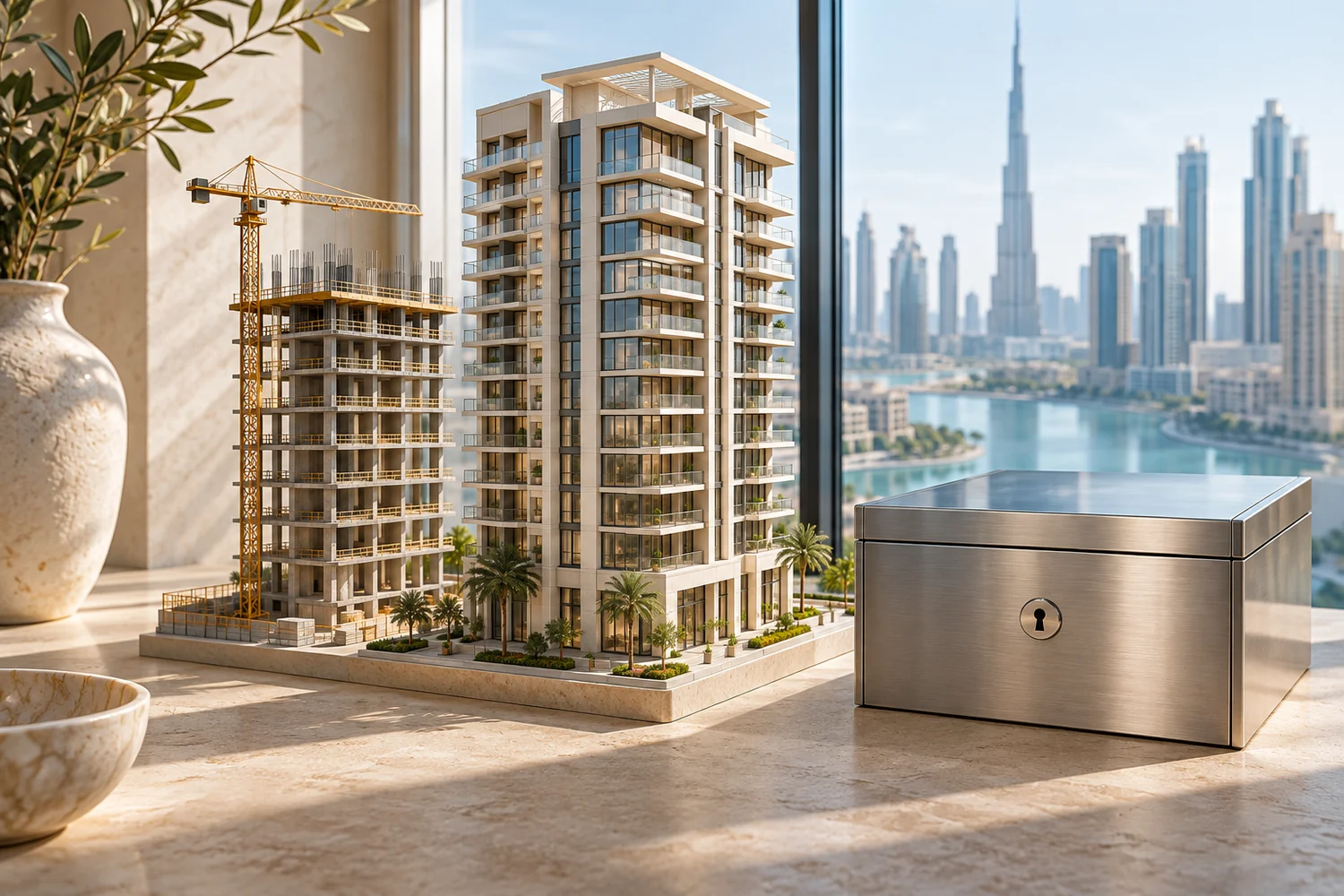
What Is an Escrow Account in Dubai Off-Plan, and How Does It Protect You?
Learn how Dubai's off-plan escrow accounts work, what they protect, their limits, and how to verify a project's payment details before you buy.
Buying off-plan means paying for a home that does not exist yet. Installments are made over months or years while the building rises, so the natural question for any buyer is simple: where does my money actually go, and what happens to it if something goes wrong?
In Dubai, the answer is the escrow account, a central part of the emirate's off-plan regulatory framework. This guide explains what an escrow account is, how it works, what it protects, where its limits lie, and how to check a project's escrow details before you pay a single dirham.
What Is an Escrow Account in Dubai Off-Plan Property?
An escrow account is a dedicated bank account, opened in the name of a single off-plan project, that receives buyers' payments for that project. The money is held by an approved bank acting as escrow agent, not by the developer. It is released to pay for construction only when agreed progress has been independently verified.
The law behind it: Dubai Law No. 8 of 2007
Dubai's escrow framework was introduced by Law No. 8 of 2007 Concerning Escrow Accounts for Real Estate Development, issued in May 2007. The official text is available through the Dubai Legislation Portal.
The law establishes three important safeguards for buyers:
- One project, one account: Every off-plan development must have its own escrow account, so funds for one tower cannot be diverted to another.
- Approval before marketing: A developer needs written authorization from the Dubai Land Department (DLD) before advertising off-plan units for sale.
- Protection from creditors: Money held in a project's escrow account cannot be seized by the developer's creditors.
The Real Estate Regulatory Agency (RERA), the DLD's regulatory arm, oversees these accounts throughout construction.
How an Escrow Account Works, Step by Step
The process follows the same broad path for every registered off-plan project in Dubai:
- The project is registered: The developer registers the project with the DLD and opens an escrow account with an approved bank. The developer and escrow agent sign a written agreement, and a copy is submitted to the DLD.
- You pay into escrow: Your booking payment and later installments go to the project's escrow account, as named in your sales and purchase agreement (SPA), not to the developer's operating account.
- Construction is verified: As work progresses, the project consultant certifies what has been completed, and RERA checks the progress.
- Funds are released in stages: The escrow agent authorizes project payments under the agreed disbursement conditions and approved technical progress. Slower construction does not automatically freeze every payment; releases must satisfy the applicable controls.
- Completion and retention: Article 14 requires the escrow agent to retain 5% of the account's total value when the developer obtains the completion certificate. The law provides for its release one year after the units are registered in buyers' names.
This link between money and visible progress is why reading a developer's updates carefully matters. Our guide on how to read a Dubai property construction update explains what each milestone actually tells you.
How Escrow Protects Off-Plan Buyers
The escrow system addresses the biggest worry in any off-plan purchase: that money paid today might not turn into a finished home tomorrow.
- Your money is used for your building: Funds cannot be moved to another project or spent on the developer's general expenses.
- Spending follows controls: The account trustee checks the agreed construction stages and approved progress before authorizing project disbursements, as explained in the DLD's escrow FAQs.
- There is a route if a project fails: Formal cancellation triggers the applicable liquidation and refund procedures. Dubai's special tribunal for unfinished and canceled projects can determine related claims and order repayments.
- There is independent oversight: A regulated bank and RERA both sit between your payment and the developer.
What escrow does not cover
Escrow is a strong safeguard, but it is not a guarantee of everything. It does not promise that a project will finish on the original date, and it cannot protect money paid outside the system. Payments made to a broker's personal account or an unofficial company account fall outside escrow protection entirely.
It also does not judge build quality or design. That is why checking the developer's track record, reviewing your SPA and carrying out a proper inspection at handover all still matter.
Before paying anything, run through our seven checks in Before You Pay a Booking Fee in Dubai. These include confirming exactly where your payment is going.
How to Check a Project's Escrow Account Before You Pay
Verifying a project takes minutes and is worth doing before every major payment, not just at booking.
- Search the official records: The Dubai REST app and the Dubai Land Department website let you look up a project by name or project number. You can see its registration status, completion percentage and escrow account details.
- Match the bank details: The escrow account named in your SPA and payment instructions should match the one in the official record. If you are asked to pay anywhere else, stop and ask why.
- Ask the developer directly: A reputable developer will readily share the project's DLD registration number and escrow bank.
- Keep checking as you pay: Compare the official completion percentage with the developer's progress reports before each installment.
Putting it into practice
Take two of Prestige One's off-plan developments as examples for these checks: Hilton Residences Dubai Maritime City, a waterfront branded residence, and Sanctuary Residences in Meydan Horizon. Search for the relevant official project record on Dubai REST, confirm its registration and escrow details, and compare the recorded progress with the developer's own construction updates.
The law requires separate escrow accounts for separate development projects. Verify the account for the project you are buying in, rather than relying only on the developer's name.
Final Thoughts: Know Where Your Money Goes
The escrow account is one of the strongest protections available to off-plan buyers in Dubai. It keeps your payments tied to your building, links spending to real progress, and places a regulated bank and RERA between your money and the developer.
Its protection only works when you use it properly, though. Verify the project, pay only into the registered escrow account, and keep checking progress as construction moves forward. If you are new to off-plan buying, our first-time buyer's guide to Dubai off-plan property is a useful next read.
Have a question about a Prestige One project? Contact our team and we will be happy to help.
Frequently Asked Questions About Escrow Accounts in Dubai
Is an escrow account mandatory for every off-plan project in Dubai?
Yes. Under Law No. 8 of 2007, any developer selling units off-plan and receiving buyer payments must use a project-specific escrow account approved under the DLD framework.
Can a developer use my payment for another project?
No. Each project's escrow account is separate, and funds can only be released for the construction of that specific development.
What happens to my money if a project is canceled?
If RERA formally cancels a project, the applicable escrow, liquidation and tribunal procedures determine refunds and buyers' rights. Repayment is not automatically immediate or guaranteed in full by the escrow balance; the outcome depends on available funds, amounts recoverable and the relevant decisions.
Does escrow still apply if I resell before handover?
The project's escrow account stays in place. Following an approved and registered resale, the new buyer takes over the remaining installments under the applicable agreement, which continue to be paid into the project's escrow account. Our guide to reselling off-plan property in Dubai covers the full process.
More Stories

Discover what comes next
Explore our developments or speak with our team for more information.